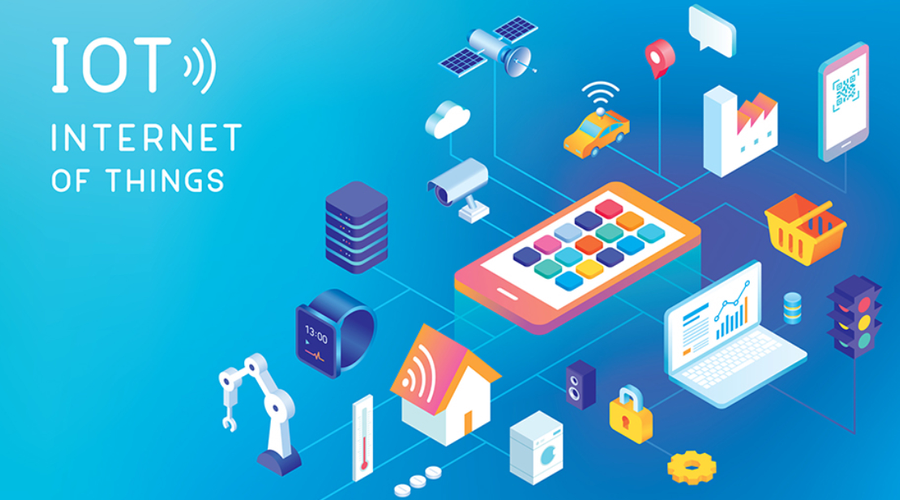
The Internet of Things (IoT) has witnessed exponential growth over the past decade, encompassing interconnected physical computing devices, sensors, software, and smart devices. These devices, often referred to as “things,” collect, transmit, and exchange data with other devices and systems over the internet. With the increasing number of connected devices, ensuring the security of IoT systems has become crucial. This article explores the challenges and solutions for securing data in the Internet of Things.
1. The Significance of IoT Security:
As IoT devices become ubiquitous in various domains such as home automation, healthcare, transportation, and manufacturing, securing these devices is of paramount importance. IoT ecosystems have been vulnerable to cyber-attacks, posing significant risks to data privacy and system integrity. Protecting IoT devices ensures confidentiality, integrity, and availability of data, preventing potential cyber threats.
2. Key Security Challenges in IoT:

a. Device Vulnerabilities: IoT devices often have limited computational power and memory, making them susceptible to exploitation. Manufacturers prioritize functionality over security, leading to potential vulnerabilities.
b. Weak Authentication and Authorization: Inadequate authentication mechanisms and weak passwords make IoT devices easy targets for hackers.
c. Lack of Encryption: Insufficient or missing encryption mechanisms expose sensitive data to interception and manipulation.
d. Lack of Standardization: The absence of uniform security standards and protocols complicates the development of comprehensive security solutions.
e. Physical Security: Physical tampering with IoT devices can compromise their security and enable unauthorized access.
f. Data Privacy Concerns: Inadequate data protection measures can result in privacy breaches, exposing individuals to identity theft and unauthorized data usage.
g. Scalability and Complexity: Managing security in large-scale IoT deployments presents challenges in implementing effective security controls and monitoring for potential threats.
3. Addressing IoT Security:
a. Secure Networks: Intrusion Detection Systems (IDS) monitor network traffic, detecting suspicious activities and policy violations to protect against unauthorized access.
b. Secure Data Transfer: Data encryption ensures sensitive information remains protected at rest, in transit, and during processing.
c. Security Protocols: Adhering to robust application messaging protocols, such as CoAP and MQTT, enhances IoT security.
4. Research Directions:
a. Device-Level Security: Develop robust security measures for resource-constrained IoT devices to mitigate vulnerabilities.
b. Blockchain Technology: Explore the integration of blockchain to enhance IoT security by providing a decentralized and tamper-resistant infrastructure.
c. Artificial Intelligence and Machine Learning: Leverage AI and ML techniques to identify and respond to IoT security threats in real-time.
d. Standardization Efforts: Encourage the development and adoption of unified security standards and protocols across IoT ecosystems.
e. User Awareness and Education: Promote awareness and education about IoT security best practices to ensure responsible use of connected devices.
Conclusion:
Securing data in the Internet of Things is a complex and evolving field. By addressing the key challenges, implementing robust security measures, and promoting research and standardization efforts, we can safeguard IoT ecosystems from cyber threats. A comprehensive approach encompassing device-level security, encryption, standardized protocols, and user awareness will contribute to a more secure and trustworthy IoT landscape.